
11th September 2025
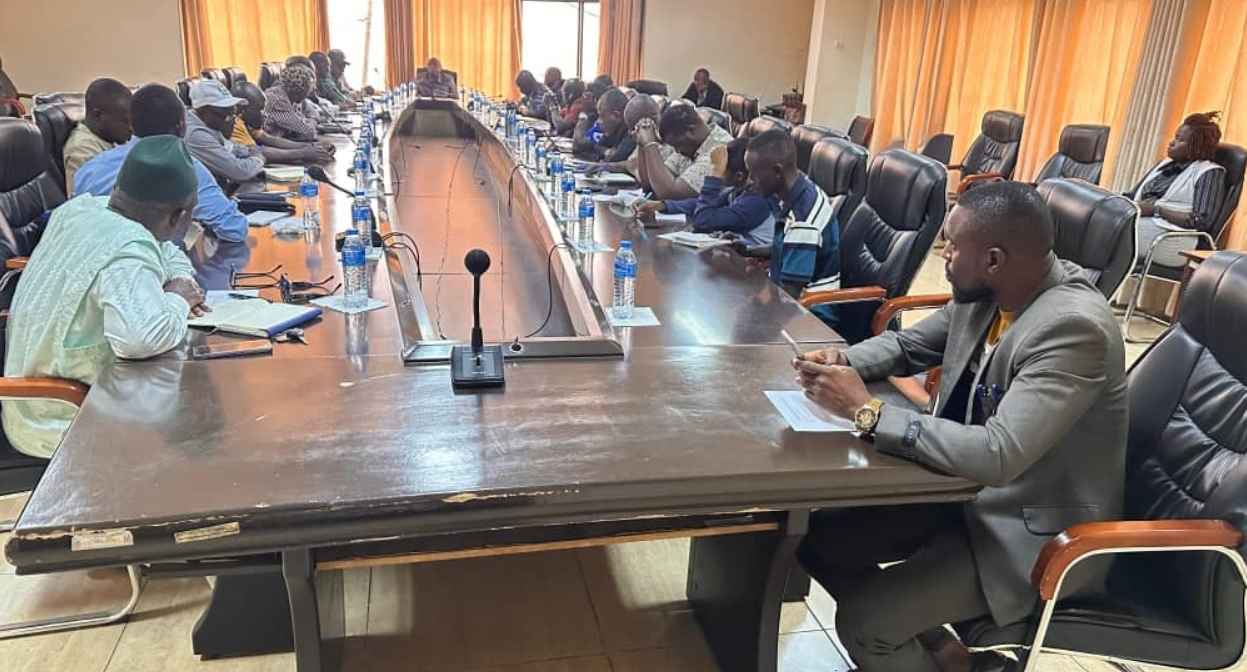
The leadership of the Security Sector on Thursday, 11th September 2025 hosted the All Political Parties Association of Sierra Leone (APPA-SL) at the ONS in a high-level dialogue session at its conference room in Freetown. The engagement, chaired by the National Security Coordinator, Mr. Abdulai Caulker, brought together senior security officials and leaders of political parties to deliberate on pressing security concerns and explore collaborative solutions. The NS Coord welcomed the membership of APP-SL and ushered in the leadership of APPA-SL to state the purpose for which they had requested to meet with the Security Sector.
The meeting was convened against the backdrop of rising public concerns around border security (especially the Yenga dispute), drug abuse, armed robbery, and the wider security implications of the recently concluded Tripartite Committee recommendations. A senior member of APPA-SL, Mr. Jonathan Sandy, raised these concerns on behalf of the Association and the need for the establishment of a sustainable working relationship between APPA-SL and the Security Sector. Mr. Sandy stated that as a political entity, they look forward to working with the sector in order to make their own contributions to the peace, security and development of the country.
In his response, the NS Coord welcomed APPA-SL’s initiative in fostering dialogue, stressing that “isolated incidents should not overshadow the relentless efforts of the Security Sector in safeguarding the peace and stability of Sierra Leone.”
Mr. Caulker underscored the importance of protecting lives and property through sustainable measures, cautioning against the politicization of criminal cases, and emphasizing the need for continuous engagement between political parties and security agencies. He reassured participants that Sierra Leone remains one of the safest countries in Sub-Saharan Africa, crediting the proactive role of the Sierra Leone Police (SLP) and sister agencies in preventing and responding to security threats.
Speaking on behalf of the ONS, the Chief of Staff Mr. Langumba Keili outlined the sector’s evolving “people-centered” approach, noting that security today is not the sole preserve of the Security Sector, but a collective responsibility involving political actors and communities. He gave a background to the establishment of the Integrated Elections Security Planning Committee (IESPC) and its role in the management and conduct of all elections in Sierra Leone. He furthered that owing to the rising concerns of violence in elections, the NS Coord has directed that the IESPC will henceforth be a permanent feature of the National Security Council Coordinating Group, the second highest security committee in Sierra Leone, for all elections across the country. He outlined the processes and procedures of the work of the IESPC, including the development and implementation of a National Elections Security Threat Assessment, which guides Security agencies in preparing for forthcoming elections.
Mr. Keili proposed the establishment of a permanent platform for dialogue between APPA-SL and the Security Sector, noting that such collaboration would strengthen communication, enhance trust, and bolster elections preparedness. He also highlighted the value of community policing, citing its successes in advanced democracies as a model Sierra Leone could adopt.
Making his contribution, the Inspector General of Police, Mr. William Fayia Sellu, stated that in comparison to other countries in Africa, Sierra Leone remains one of the safest countries and acknowledged that the recent robberies in Bo and Kenema, resulting in the death of a Catholic Father and injuries sustained by the NASSIT Manager in Bo, were unfortunate. However, he informed that the SLP has been able to swiftly respond and six suspects have been arrested in respect of the robberies. He assured of the SLP steadfastness to curb criminalities. The IGP emphasized the pivotal role of local policing in curbing crime and improving community safety.
On the contentious issue of political prisoners, the IGP clarified that while 250 individuals were initially classified as political detainees in April 2025, the number was steadily reduced to 37 by the finalization of the Tripartite Committee’s work. “There are presently no individuals in Sierra Leone detained on political grounds,” the IGP stated. He concluded by requesting for stronger judicial collaboration to prevent the premature release of offenders, while urging citizens to embrace the principle of “see something, say something.”
The issue of border security, particularly the long-standing dispute between Sierra Leone and Guinea over the ownership of Yenga, featured prominently in the discussions. The NS Coord acknowledged the complexities of resolving the issue, noting that while treaties have been signed, responses from Guinea have not yielded results. He praised the Government’s diplomatic efforts under President Julius Maada Bio, affirming that “all evidences point to Yenga belonging to Sierra Leone.”
Brigadier General PJ Schenks of the Republic of Sierra Leone Armed Forces (RSLAF) reinforced this assertion, reporting that RSLAF’s presence had deterred further encroachments by Guinean forces. He disclosed that the border has been temporarily closed to pressure for dialogue while protecting Sierra Leone’s sovereignty.
Echoing these sentiments, Mr. Abdul Karim Will, the Director of Strategic Communication and Technology Directorate at ONS, outlined the numerous efforts that have been made in resolving the impasse, but Guinea has always reneged in supporting the efforts. He noted that Guinea is also the main beneficiary from cross-border trade while failing to reciprocate efforts towards peaceful coexistence. Meanwhile, the NS Coord highlighted the recent 12 Man ECOWAS Mission to Yenga which is aimed at resolving the dispute by conducting a technical on-site assessment visit at the disputed territory as a step towards a diplomatic resolution.
The Director General of the Central Intelligence Security Agency (CISA), Mr. Ansumana M. Idriss, used the platform to spotlight political intolerance as a recurring driver of insecurity, particularly during election cycles. He urged APPA-SL to champion tolerance and dialogue within the political space, stressing its importance for peace and democratic consolidation.
The meeting concluded with a shared commitment to strengthen communication, conduct in-depth analyses of security trends, and institutionalize regular engagements between the Security Sector and political parties. Participants agreed that political collaboration is indispensable in sustaining peace, safeguarding elections, and advancing Sierra Leone’s reputation as one of the most stable countries in the sub-region. The meeting resolved that going forward, the Security Sector and APPA-SL will now be holding quarterly meetings.
End
StratCom@ONS
www.ons.gov.sl
Toll-Free Line: 119